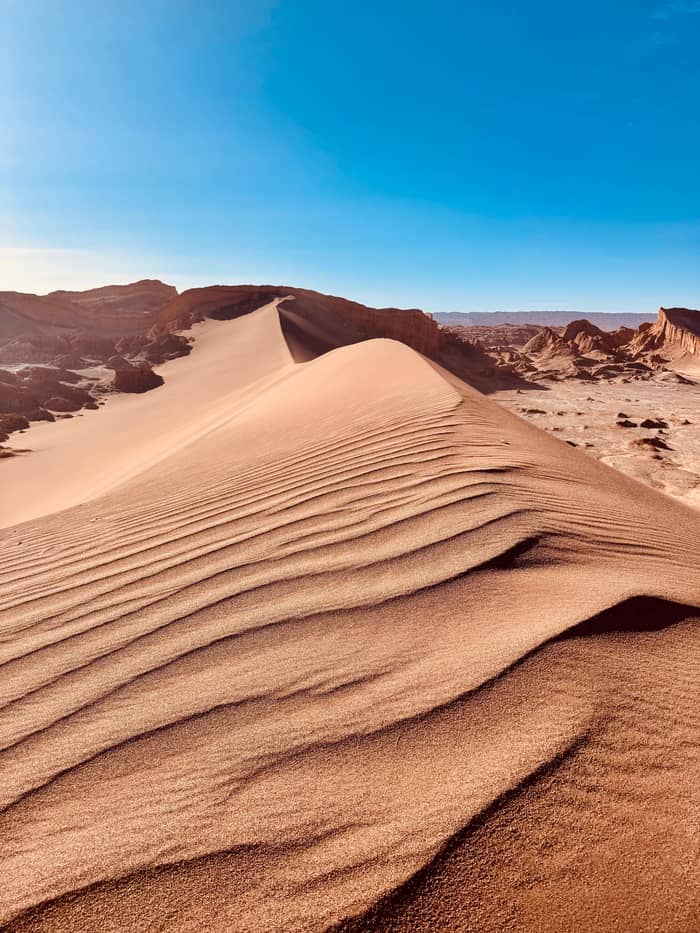
40-minute hike
Sunset with a cocktail
The tour sold on this site
- Length4.5 hours
- PickupIncluded
- CancelFree, 24 hours
Your own checklist
Checklist · 10 points
Tick off each point as you complete it. This device keeps your progress.
0 / 10 ready
Everything is ready. All that is left is to choose the afternoon of your sunset in the valley.
Book your seatThe real risks here are thin air, strong sun, cold nights and the odd pickpocket, not the desert itself. Read the official advice, pack for both ends of the thermometer, and know the valley rules before you arrive.
Editorial team, valledelalunatour.quest · Updated November 12, 2026 · Read in 7 min
Is San Pedro de Atacama safe? Britain's Foreign Office does not single the town out in its Chile advice, but it does warn that pickpocketing, mugging and theft from vehicles are very common throughout the country, including at airports, bus stations, viewpoints and petrol stations.1 In a small town full of visitors that means ordinary care: bags zipped, phones out of back pockets, and valuables left in the hotel safe.
Cars are a particular target. The same advice says hire cars are broken into while parked at viewpoints and petrol stations,7 which matters if you drive to the valley or the lagoons yourself. Leave nothing visible inside, lock up at every stop, and keep passports and cards on you. On buses, keep valuables with you rather than in the luggage hold, especially on long trips between regions.8
Help is close if you need it. CONAF notes that San Pedro de Atacama has a health post, firefighters and the Carabineros police, plus currency exchange, car rental and hotels.9 The town's tourism office of Sernatur faces the main square, and Sernatur keeps a register of tourism services,10 so you can check that an agency is registered before you hand over money.
Day and night
| Situation | By day | At night | Source |
|---|---|---|---|
| Autumn in San Pedro | 20°C to 26°C | Around 5°C | Chile Travel |
| Typical swing in town | 27 degrees | 1 or less | Chile Travel |
| Desert days, high nights | 25°C to 30°C | Below 0°C | Chile Travel |
Ranges as Chile Travel gives them on different pages; no weather station close enough gives a monthly record here.17,4,13
The town sits at 2,450 m above sea level, and Chile Travel advises precautions against altitude sickness, above all before higher excursions.2 The altitude of Valle de la Luna in San Pedro de Atacama is a little higher: Chile Travel places the valley above 2,500 m.3 The UK government lists altitude sickness among the health risks in parts of Chile.14
Chile Travel's advice is practical: drink plenty of water, pace yourself and avoid overexertion,5 and in its itineraries it adds that you should avoid alcohol on your first night.11 The valley is a good first outing for exactly this reason. Its walks are short and its height close to the town's, so you get used to the thin air before the trips that climb far higher.
Those come later. El Tatio's geyser field sits higher than 4,300 m,12 the Hito Cajon pass to Bolivia at 4,549 m,15 and the ALMA observatory's plateau at 5,000 m.16 Planning the valley for your first or second day, and the geysers or the high lagoons for later in your stay, is the simplest way to let your body adjust. If you feel unwell, rest and drink water, and remember that the town has a health post.
Expect both ends of the thermometer on the same day. Chile Travel describes San Pedro's climate as a high desert with scarce rain and abrupt swings, from 27 degrees by day to 1 or less at night.4 Its itinerary pages speak of hot days of 25°C-30°C and freezing nights below 0°C, especially at altitude.13 A sunset tour spans both: warm walks in the afternoon, a cold wait for the last light.
The seasons shift the scale rather than the pattern. In autumn, which Chile Travel names as the best time to travel, days run between 20°C and 26°C with nights around 5°C.17,19 From December to March the altiplanic winter brings rain and storms to the high country and can close routes to the main attractions.20
Weather also closes the valley now and then. CONAF shuts its trails at times for sandstorms in winter or rain in summer,21 and the official ticket page lets you use your ticket another day or ask for a refund if bad weather in the valley stops your visit.22 Keep a spare afternoon in your plan so a closure costs you nothing.
Your worries
Match each concern to the simplest fix before you travel.
If I worry about the altitude
Do the valley first
It sits just above 2,500 m, close to the town.3
If I worry about theft
Keep bags with you
Theft is common at stations and viewpoints.1
If I feel the cold
Pack a warm layer
Nights can fall to 1 degree or less.4
If I burn easily
Cover up and reapply
Chile Travel warns of extreme solar radiation.5
If I travel with small kids
Choose short trails
Tres Marias is 80 m and 30 minutes.18
Tours by effort
40-minute hike
The tour sold on this site
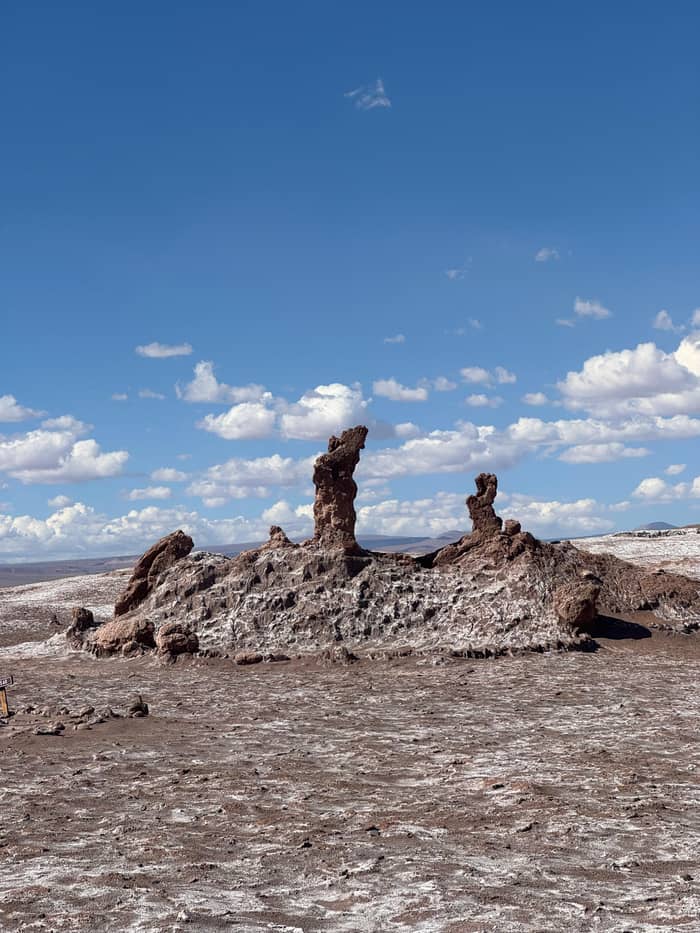
Moderate walking
Up to 14 participants
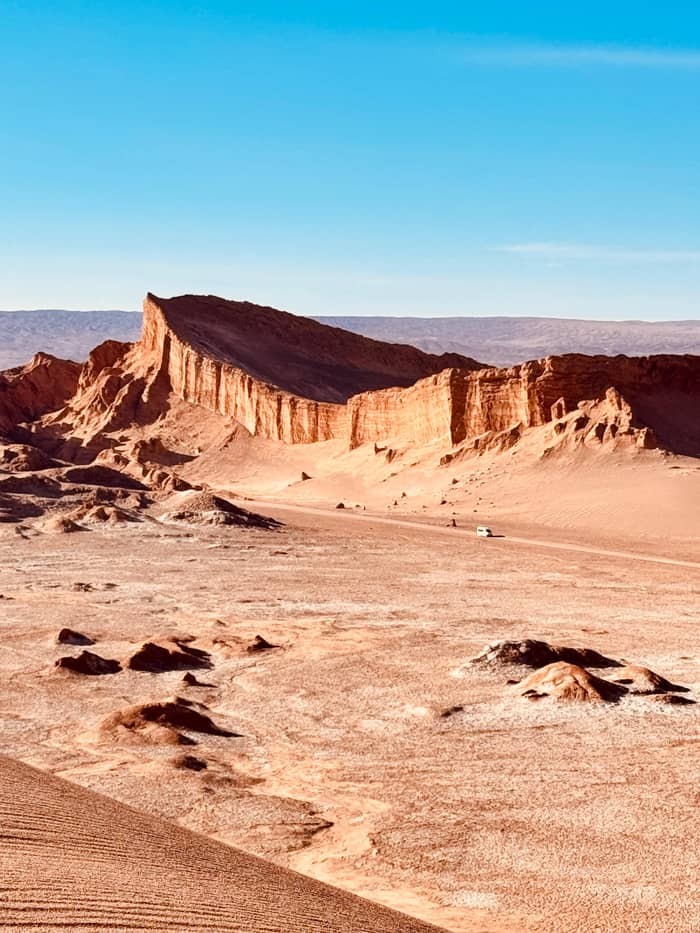
Most walking
Dune walk and sunset hike
The sun is stronger than it feels. Chile Travel warns of extreme solar radiation and recommends sunscreen, a hat and UV sunglasses,5 and NASA scientists working in the desert describe intense ultraviolet radiation on its surface.29 Reapply sunscreen during the afternoon, cover your neck and keep your sunglasses on even when the sky turns hazy with dust.
Water is the other essential. Chile Travel says it is essential to bring plenty of water to the valley,24 and its visitor guide repeats the advice to drink a lot.30 The dry air takes moisture from you without sweat you can see, so drink before you feel thirsty and carry a bottle on even the shortest trail. In town, refill where you can.
Dust and wind come with the afternoon. On the Cornisa trail CONAF warns of strong winds carrying fine particles,31 and sandstorms can close the trails in winter.21 A buff or scarf over your mouth, glasses rather than contact lenses if your eyes are sensitive, and a bag for your camera keep the grit out.
Pick a pace
Compare tours by walking time, group size and length.
Compare 3 alternatives
Compare tours by walking time, group size and length.
≈
View≈
View≈
ViewFrom-prices on GetYourGuide, shown at the ECB reference rate. Your exact price is confirmed during booking.
Getting used to the height
Arrival evening
No alcohol on the first night, plenty of water.11
First afternoon
A low first trip, just above 2,500 m.3
Every day
Drink often and keep sunscreen and a hat on.5
Later in the stay
El Tatio, above 4,300 m, once you feel well.12
Any evening
Nights can fall below 0°C.13
Chile Travel's own packing list for the valley tour is a good start: comfortable clothes, suitable shoes, water and protection from the sun, meaning a hat, sunglasses and sunscreen.23 For the desert in general it recommends dressing in layers, trekking shoes, a hat and high-factor sunscreen.13 Add a warm jacket for the evening, even in summer.
Footwear matters more than it seems. The tour sold on this site includes a hike of 40 minutes, and the ridges are sandy and loose in places, so closed shoes with grip beat sandals. Bring a small backpack that leaves your hands free on the steeper sections, and a headlamp if you plan to stay out after sunset.
Practical Valle de la Luna information for the day also covers money and phones. Carry cash in Chilean pesos, because card signals can be unreliable in the region,11 and expect little electricity and limited Wi-Fi in town.32 Download your valley ticket and maps before you leave the hotel, and charge your phone the night before.
Video
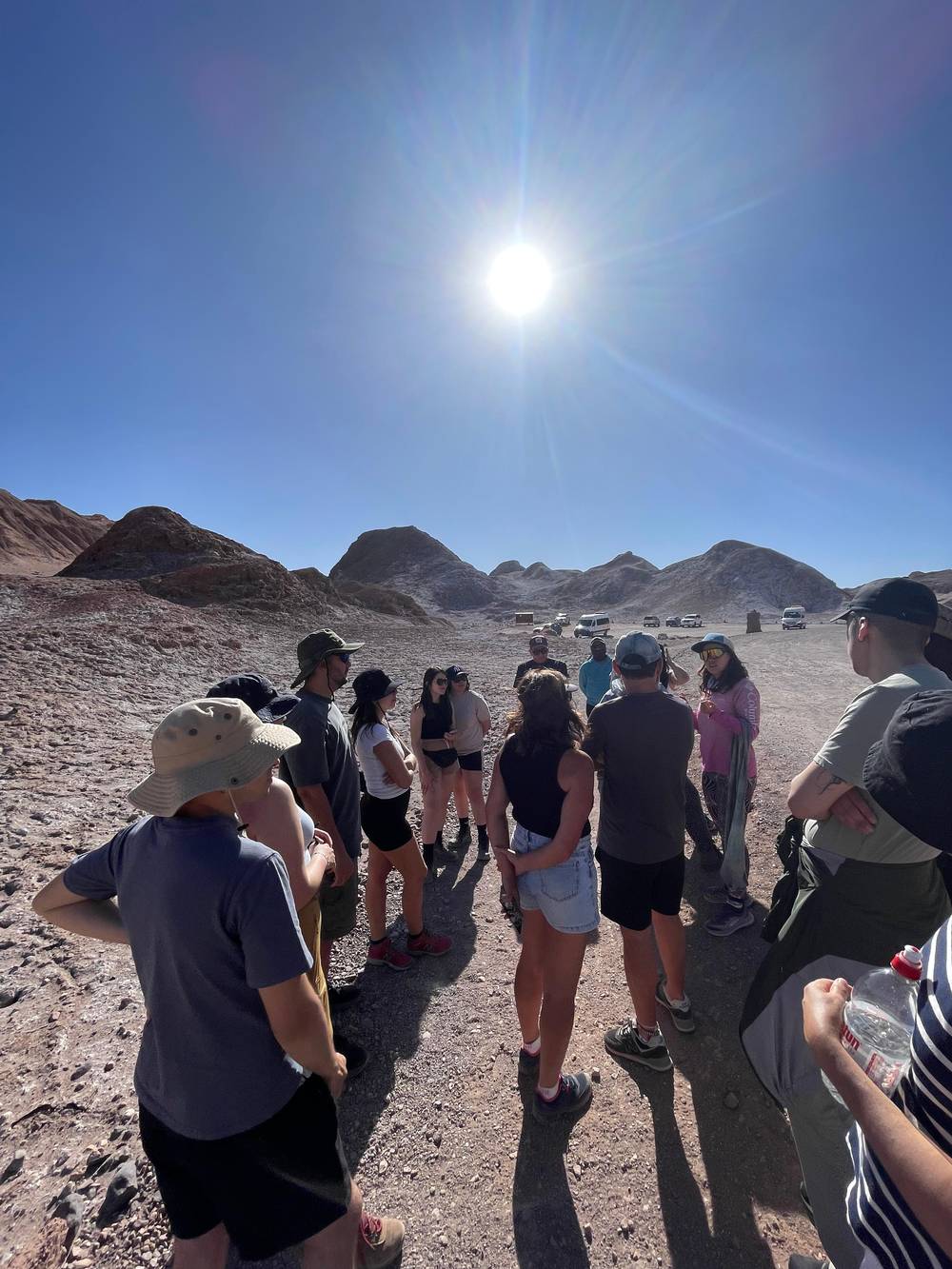
Mark and Asya on YouTube · Your tap on play is what loads the video.
To prevent altitude sickness, drink plenty of water, pace yourself, and avoid overexertion. Protect yourself from extreme solar radiation with sunscreen, a hat, and UV sunglasses.
Valle de la Luna is a nature sanctuary inside a national reserve, and its rules are enforced. Eating and drinking alcohol are not allowed inside the valley,6 and visitors who break the rules are expelled without a refund.33 The official ticket page adds that pets and drones are banned,26 and CONAF forbids any heat source, from grills to cigarettes, under Law 20653.34
Respect the paths. The trails are clearly signposted and crossing their limits is strictly forbidden,27 and CONAF bans leaving the trails or taking risks such as climbing rocks or running.35 Nothing may be taken: not seeds, plants, branches, stones or rocks.36 Music, shouting and horns are also forbidden; CONAF asks you to enjoy the sounds of nature.37
Entry is organised in groups of at most 12, and independent visitors must pick a leader for their party or family.38,39 At every walking sector a ranger takes your details before you set off.40 These rules protect a fragile place and keep visits pleasant, so follow the ranger's instructions; in a reserve, the rangers are the authority.
Children are welcome. The official ticket page says children aged 1 to 12 do not pay, and from 13 they pay the entry fee; elsewhere on that page ages 12 to 17 are charged CLP 5,400, which leaves 12-year-olds in two groups, so settle their fare with the staff at the entrance.41,42 Short walks suit them best: the Tres Marias trail is only 80 m and 30 minutes in all.18 Keep them close on the Mina Victoria trail, where CONAF warns of a long fall into a mine shaft.28
Some tours set limits. A small-group valley tour says it is not recommended for pregnant travelers, people with back problems or high blood pressure, children under 7 or adults over 70, and that it involves moderate walking. The trails themselves are rated easy by CONAF, with winter conditions moderate,43 but sand and slopes make them hard going for wheelchairs.
If walking is difficult, choose a tour with short stops and plenty of time at the viewpoints, and tell the operator when you book. A shared shuttle from El Loa airport is listed as wheelchair accessible, and so is a much-reviewed stargazing experience in San Pedro, so an evening under the stars is open to almost everyone.
FAQ
The UK advice warns that pickpocketing and theft from vehicles are very common across Chile.1
Chile Travel advises precautions against altitude sickness there.2
Chile Travel describes nights of 1 degree or less in town.4
The valley rules ban eating and alcoholic drinks inside.6
CONAF lists a health post, firefighters and police in town.9
Sources
Continue reading
Planning a sunset in the Valle de la Luna? Ask a real person.